
Cooking at home is one of the best ways to eat healthier, save money, and enjoy fresh meals. However, many people avoid home cooking because it feels time-consuming and messy. A cluttered kitchen, overflowing sink, and long prep time can quickly turn cooking into a stressful experience.
The truth is that cooking doesn’t have to be slow or chaotic. With the right habits, organization, and techniques, you can prepare meals efficiently while keeping your kitchen clean from start to finish. Learning smart cooking tips for faster and cleaner kitchens can completely change how you feel about cooking at home.
This complete guide will show you how to cook with less mess, less stress, and more confidence—no matter your skill level.
Why Fast and Clean Cooking Matters
A clean, efficient kitchen makes cooking more enjoyable and sustainable.
Benefits of Faster and Cleaner Kitchens
-
Saves time on meal prep and cleanup
-
Reduces stress and frustration
-
Encourages consistent home cooking
-
Improves food safety and hygiene
-
Creates a more enjoyable cooking environment
When cooking feels easier, you’re more likely to do it regularly.
Start with a Clean and Organized Workspace
Clean cooking begins before you turn on the stove.
Why Organization Is Key
-
Reduces searching for tools
-
Prevents cross-contamination
-
Improves focus and efficiency
Clearing your workspace sets the tone for the entire cooking process.
Practice Mise en Place for Faster Cooking
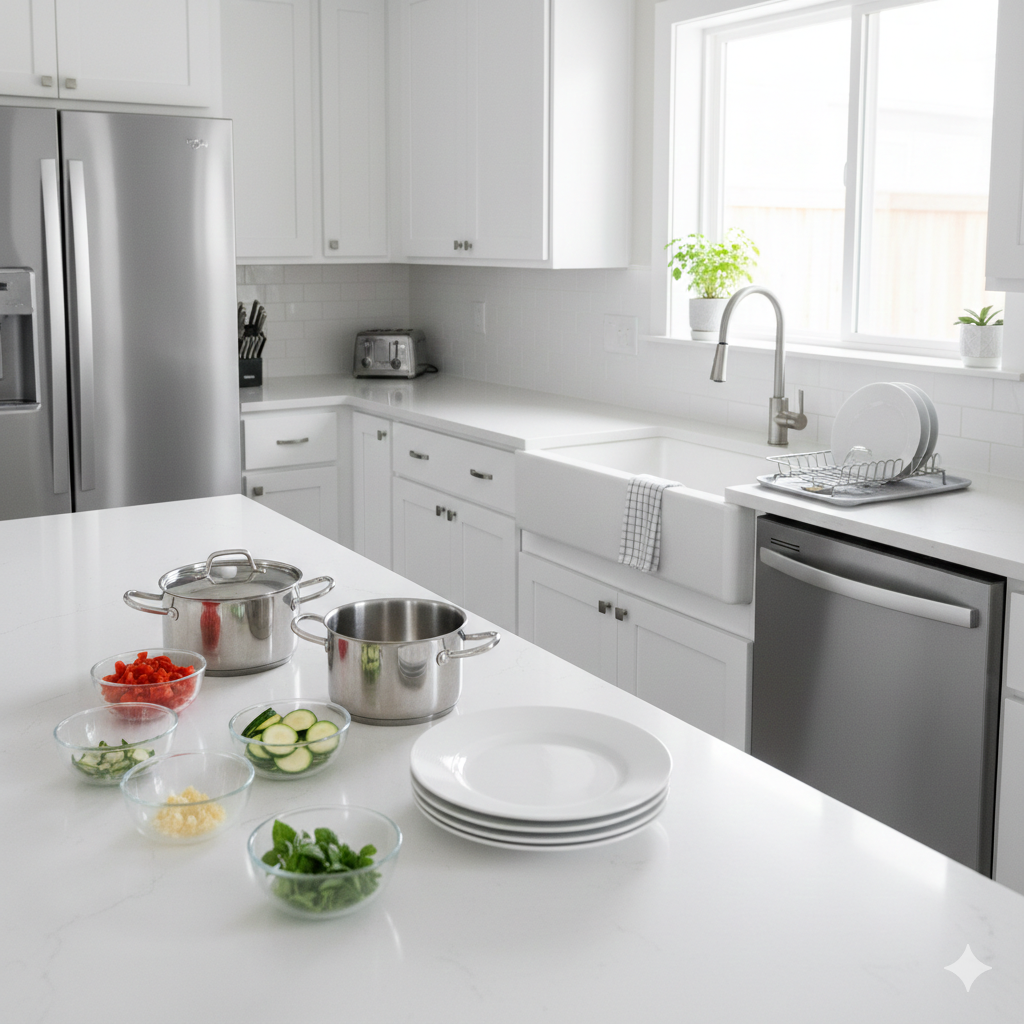
“Mise en place” means preparing ingredients before cooking.
How Mise en Place Saves Time
-
Prevents rushing during cooking
-
Reduces spills and mistakes
-
Keeps counters organized
Chopping, measuring, and prepping first leads to smoother cooking.
Declutter Your Countertops
Too many items slow you down.
Countertop Decluttering Tips
-
Remove non-essential appliances
-
Keep only current ingredients and tools out
-
Wipe surfaces before cooking
Less clutter equals faster movement and easier cleaning.
Use Fewer Tools and Utensils
Every extra tool creates extra cleanup.
Minimal Tool Cooking Tips
-
Choose one good knife
-
Use multipurpose utensils
-
Avoid unnecessary gadgets
Simple tools are faster to clean and easier to manage.
Choose One-Pan and One-Pot Meals
Fewer dishes mean less cleanup.
Benefits of One-Pan Cooking
-
Faster prep and cooking
-
Minimal cleanup
-
Easier organization
Sheet-pan meals, stir-fries, and soups are ideal options.
Prep Ingredients Efficiently
Smart prep techniques reduce mess.
Efficient Prep Tips
-
Chop similar ingredients together
-
Use one cutting board when safe
-
Line boards with parchment for quick cleanup
Batching prep saves time and effort.
Clean as You Go
Cleaning during cooking prevents pileups.
Clean-As-You-Go Habits
-
Rinse tools immediately after use
-
Wipe spills right away
-
Load the dishwasher while food cooks
Small actions prevent big messes later.
Use Trash and Compost Bowls
Avoid constant trips to the trash.
Why Trash Bowls Help
-
Keeps scraps contained
-
Reduces counter mess
-
Speeds up prep
One simple bowl makes a big difference.
Organize Ingredients by Cooking Order
Visual order improves flow.
Ingredient Organization Tips
-
Group items by recipe step
-
Place frequently used items closer
-
Move finished ingredients aside
This reduces confusion and clutter.
Read the Recipe Before You Start
Skipping this step causes delays.
Why Reading Recipes Matters
-
Prevents surprises
-
Helps plan prep
-
Reduces mistakes
Preparation equals speed and cleanliness.
Use Proper Heat Control
Spills often come from rushed cooking.
Heat Control Tips
-
Avoid cooking on high heat unnecessarily
-
Use appropriate pan sizes
-
Monitor food closely
Controlled heat reduces splatter and burning.
Cover Pans When Appropriate
Covers reduce mess and speed cooking.
Benefits of Using Lids
-
Prevents splatter
-
Retains moisture
-
Reduces cooking time
Use lids strategically for cleaner cooking.
Line Pans and Trays
Prevent stuck-on messes.
Lining Tips
-
Use parchment paper
-
Use foil for roasting
-
Use silicone baking mats
Cleanup becomes almost effortless.
Prep Ingredients in Advance
Meal prep saves time during busy days.
Advance Prep Ideas
-
Wash and chop vegetables
-
Marinate proteins
-
Pre-cook grains
Prepared ingredients speed up daily cooking.
Keep Your Sink Ready
A full sink slows everything down.
Sink Management Tips
-
Keep one side empty if possible
-
Rinse dishes immediately
-
Avoid stacking dirty items
A usable sink supports clean cooking.
Store Ingredients Smartly While Cooking
Organization continues during cooking.
Storage Tips
-
Use small bowls for prepped ingredients
-
Cover unused items
-
Label if prepping multiple recipes
Clear storage prevents spills and confusion.
Use the Right Size Cookware
Oversized or undersized cookware causes mess.
Cookware Tips
-
Use pans with higher sides for saucy dishes
-
Avoid overcrowding
-
Match pot size to portion
Proper cookware prevents spills and uneven cooking.
Keep Cleaning Supplies Handy
Easy access encourages cleaning.
Must-Have Cleaning Tools
-
Damp cloth or paper towels
-
Dish sponge
-
Spray cleaner
Immediate cleanup is faster than waiting.
Avoid Overcrowding the Cooking Area
Too many cooks create chaos.
Kitchen Space Tips
-
Work in zones
-
Keep unnecessary people out
-
Clear space around the stove
Focus improves speed and cleanliness.
Batch Cooking for Faster Kitchens
Cooking in bulk reduces repetition.
Batch Cooking Benefits
-
Fewer cooking sessions
-
Less cleanup overall
-
Better time management
One big mess is better than many small ones.
Smart Storage After Cooking
Cleanup continues after the meal.
Storage Tips
-
Let food cool before storing
-
Use airtight containers
-
Label leftovers
Organized storage keeps the kitchen clean longer.
Cooking Tips for Cleaner Cutting Boards
Cutting boards get messy fast.
Board Cleaning Tips
-
Use separate boards for raw proteins
-
Wash immediately after use
-
Choose dishwasher-safe boards
Clean boards improve food safety.
Keep Floors Clean While Cooking
Floors often get overlooked.
Floor-Saving Tips
-
Wipe spills immediately
-
Use a mat near prep areas
-
Sweep quickly after cooking
Small habits prevent sticky buildup.
Reduce Packaging and Waste
Less waste means less mess.
Waste Reduction Tips
-
Buy whole ingredients
-
Prep produce yourself
-
Avoid excessive packaging
Simpler ingredients mean simpler cleanup.
Cooking Faster with Better Planning
Planning reduces chaos.
Weekly Planning Tips
-
Plan meals in advance
-
Create a shopping list
-
Prep ingredients together
Planning saves both time and energy.
Tools That Help Maintain Clean Kitchens
Some tools truly help.
Helpful Tools
-
Dishwasher-safe cookware
-
Nonstick pans
-
Food processors
Choose tools that simplify cleanup.
Avoid These Common Kitchen Mess Mistakes
Common Mistakes
-
Starting with a dirty kitchen
-
Using too many tools
-
Ignoring spills
-
Cooking without a plan
Avoiding these instantly improves efficiency.
Teaching Kids to Cook Cleanly
Good habits start early.
Kid-Friendly Tips
-
Assign cleanup tasks
-
Teach clean-as-you-go
-
Keep tools age-appropriate
Shared responsibility keeps kitchens tidy.
Faster Cooking Doesn’t Mean Rushing
Speed comes from organization, not panic.
Smart Speed Tips
-
Stay calm
-
Work methodically
-
Focus on flow
Rushing creates mess; rhythm creates efficiency.
Healthy Cooking Is Easier in Clean Kitchens
Clean kitchens support healthy habits.
Health Benefits
-
Better hygiene
-
Less stress eating
-
More motivation to cook
A clean space encourages better food choices.
Create a Kitchen Routine That Works for You
Consistency builds habits.
Routine Tips
-
Same prep order each time
-
Same cleanup pattern
-
Same storage system
Routine improves speed naturally.
Final Thoughts: A Faster, Cleaner Kitchen Makes Cooking Enjoyable
Cooking tips for faster and cleaner kitchens are about creating systems that work for you. When your kitchen is organized, your prep is efficient, and your cleanup is manageable, cooking becomes less of a chore and more of a pleasure.
By cleaning as you go, using fewer tools, planning ahead, and staying organized, you can cook delicious meals without spending hours cleaning afterward. A faster, cleaner kitchen doesn’t require perfection—just smart habits practiced consistently. Over time, these habits will transform the way you cook and how you feel in your kitchen every day.